Category: Overall Sales Effectiveness

  • Overall Sales Effectiveness (OSE): The CEO’s Framework for Predictable Revenue Growth

    Most CEOs don’t have a sales problem. They have an overall sales effectiveness problem.

    Revenue stalls despite adding salespeople. Forecasts become less reliable. Pipeline reviews consume hours, yet executives still don’t know whether they will hit the quarter. Marketing blames Sales. Sales blames Marketing. Finance loses confidence in the forecast.

    The question isn’t:

    “How hard is my sales team working?”

    The better question is:

    “How effective is my sales organization at creating, winning, and closing business?”

    That is what Overall Sales Effectiveness (OSE) measures.


    The CEO's Framework for Predictable Revenue Growth

    What is OSE?

    Overall Sales Effectiveness is the ability of a sales organization to consistently generate profitable revenue using its existing people, processes, and technology.

    Rather than focusing on one metric—like quota attainment or pipeline size—OSE evaluates the entire sales engine.

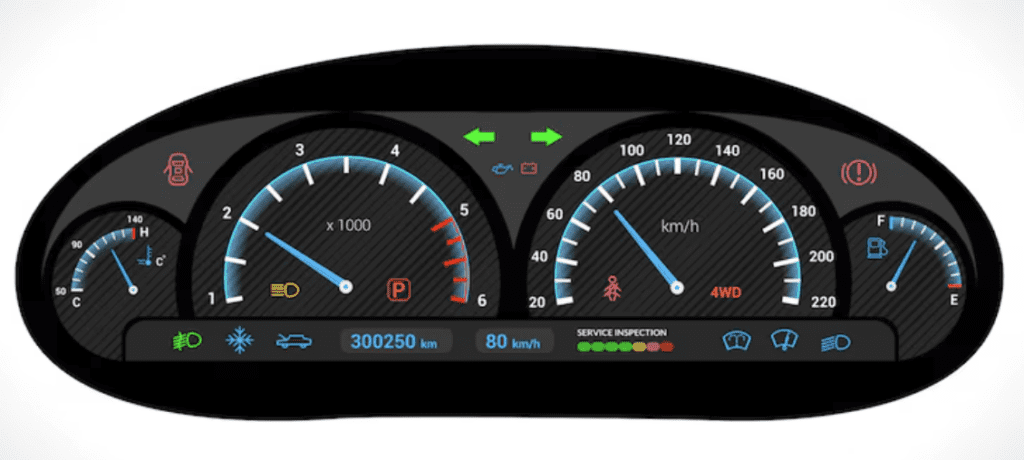
    Think of it like the dashboard in your automobile.

    You don’t drive by watching only the speedometer.

    You also monitor:

    • Fuel
    • Engine temperature
    • Oil pressure
    • Battery
    • Tire pressure
    Overall Sales Effectiveness evaluates the entire Sales Engine.

    Revenue is simply the outcome.

    The real drivers lie underneath.

    Sales organizations work exactly the same way.


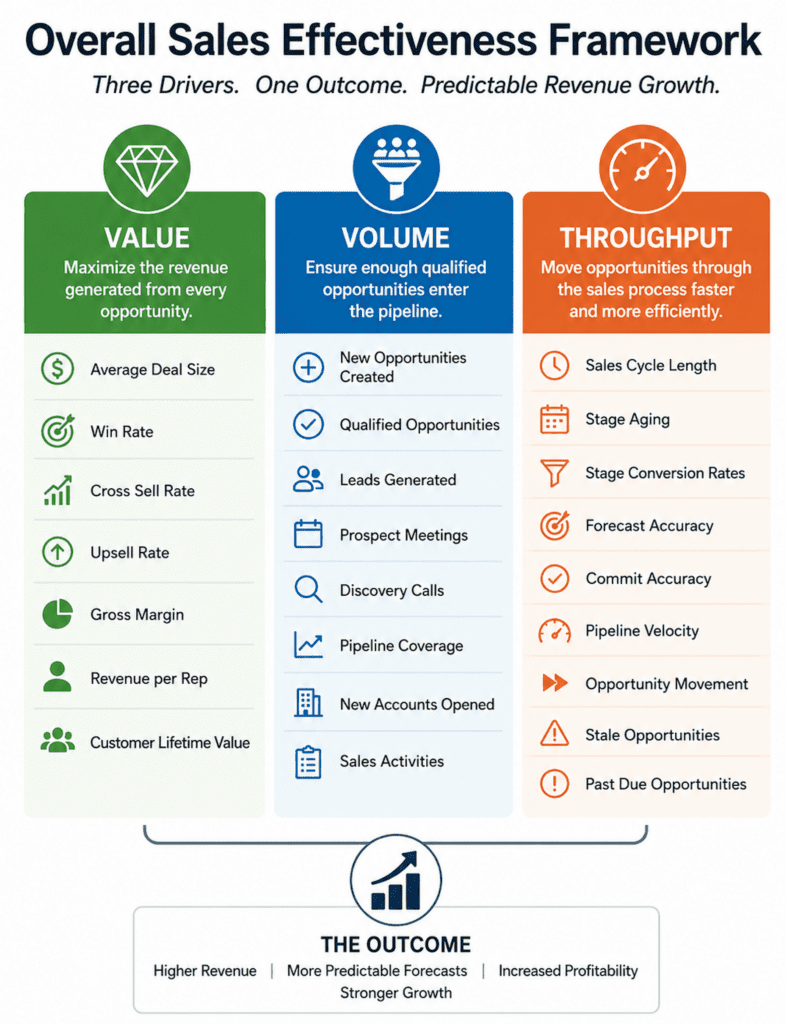
    The Three Drivers of Sales Effectiveness

    Every sales organization can be evaluated using three primary factors.

    1. Value

    How much revenue is generated from every opportunity?

    Value focuses on maximizing the financial impact of every sale.

    Typical Value KPIs include:

    • Average Deal Size
    • Win Rate
    • Cross Sell Rate
    • Upsell Rate
    • Renewal Rate
    • Gross Margin
    • Revenue per Sales Rep
    • Customer Lifetime Value

    When Value improves:

    • Salespeople sell larger opportunities
    • Margins increase
    • Customers purchase additional products
    • Revenue grows without increasing headcount

    2. Volume

    Do we have enough opportunities entering the sales pipeline?

    Without opportunity volume, future revenue eventually declines.

    Volume measures the health of the top of the funnel.

    Typical Volume KPIs include:

    • New Opportunities Created
    • Qualified Opportunities
    • Leads Generated
    • Prospect Meetings
    • Discovery Calls
    • New Accounts Opened
    • Pipeline Coverage
    • Sales Activities

    When Volume improves:

    • Pipeline becomes healthier
    • Forecast confidence increases
    • Revenue becomes more predictable
    • Sales managers spend less time worrying about pipeline shortages

    3. Throughput

    How efficiently do opportunities move through the sales process?

    Many companies already have enough opportunities.

    The real problem is they move too slowly.

    Throughput measures sales execution.

    Typical Throughput KPIs include:

    • Sales Cycle Length
    • Stage Aging
    • Stage Conversion Rates
    • Pipeline Velocity
    • Forecast Accuracy
    • Commit Accuracy
    • Past Due Opportunities
    • Stale Opportunities
    • Opportunity Movement

    When Throughput improves:

    • Deals close faster
    • Forecasts become more reliable
    • Pipeline quality increases
    • Cash flow improves
    Overall Sales Effectiveness - Value, Volume, Throughput
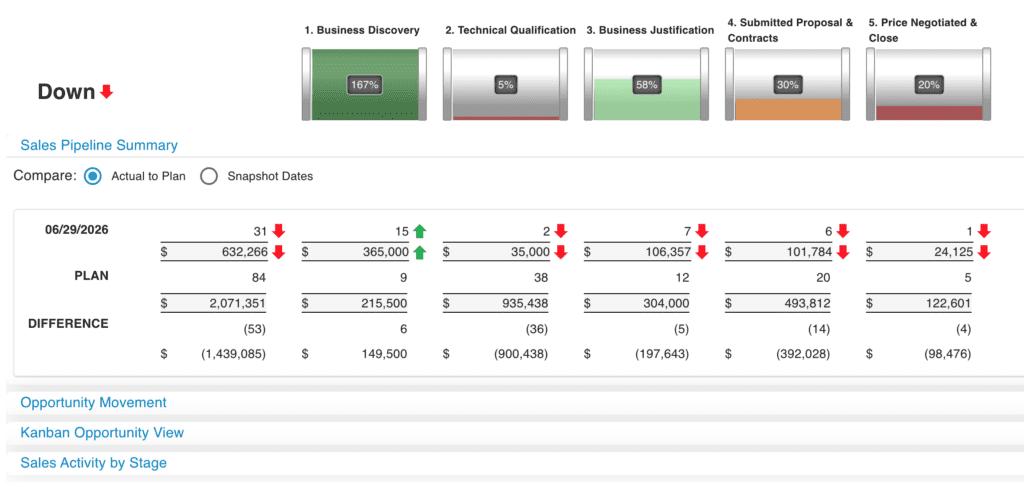
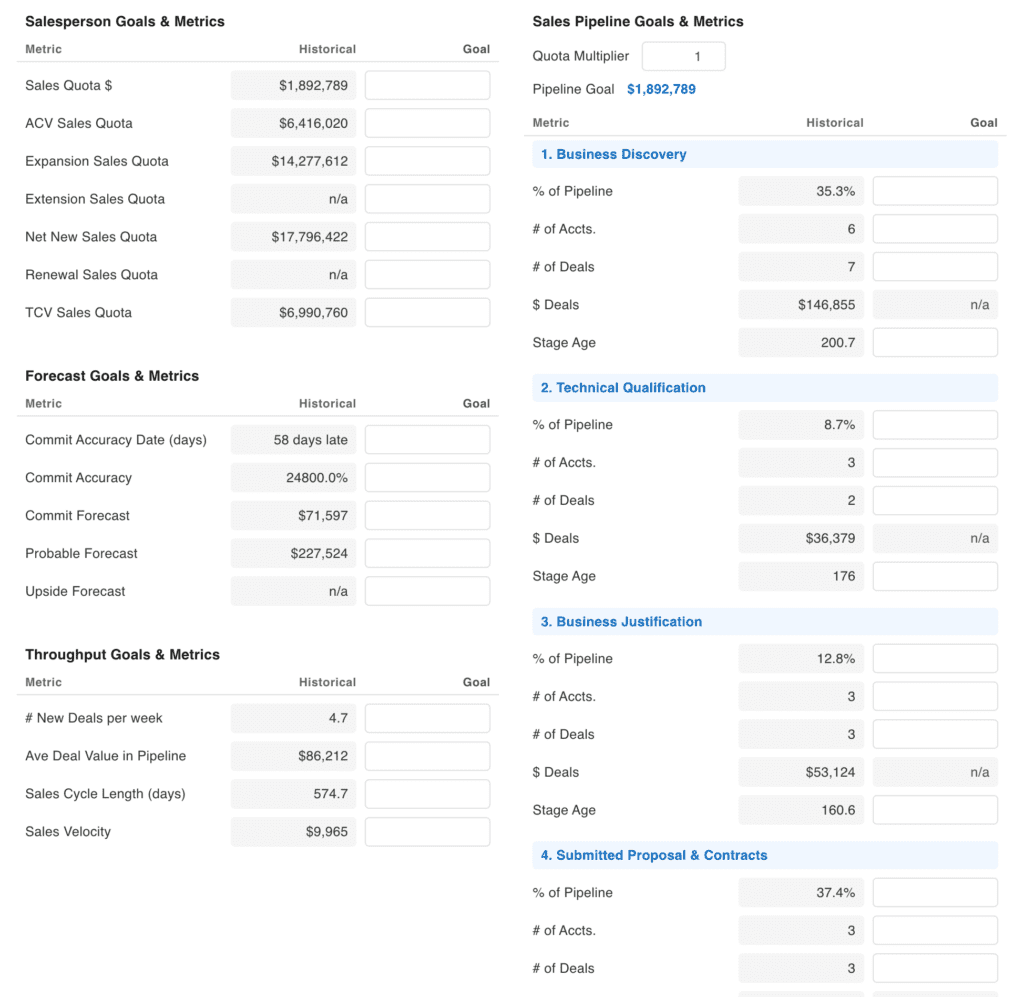
    KPI Sales Metrics Provide Actionable Management Insights

    Why CEOs Should Care

    Every revenue problem usually starts in one of these three areas.

    If Value is weak…

    Your salespeople may be discounting, selling too low in the organization, or failing to communicate business value.

    If Volume is weak…

    Future revenue is already declining—even if today’s numbers look good.

    If Throughput is weak…

    The pipeline becomes clogged, forecasts become inaccurate, and opportunities remain open long after they should have been won or lost.

    Without measuring all three, leadership is forced to manage using intuition instead of facts.


    The Goal Isn’t More Activity

    Many organizations attempt to solve revenue problems by demanding:

    • More calls
    • More emails
    • More meetings

    Activity alone rarely fixes the problem.

    Instead, executives should ask:

    • Are we creating enough qualified opportunities?
    • Are we winning enough of them?
    • Are they moving through our process efficiently?

    Those answers determine revenue growth.


    Overall Sales Effectiveness Creates Executive Visibility

    When CEOs monitor Value, Volume, and Throughput together, they gain something far more valuable than another dashboard.

    They gain visibility.

    Visibility allows leadership to:

    • Predict future revenue with greater confidence
    • Identify problems before quarters are missed
    • Coach managers using objective metrics
    • Improve forecast accuracy
    • Increase sales productivity
    • Grow revenue without simply adding more salespeople

    Final Thought

    The highest-performing B2B sales organizations don’t succeed because they have better luck or simply work harder.

    They succeed because they consistently improve the three drivers that determine every sales outcome:

    Value – Increase the revenue generated from each opportunity.

    Volume – Ensure enough qualified opportunities enter the pipeline.

    Throughput – Move opportunities through the sales process faster and more predictably.

    When these three areas improve together, Overall Sales Effectiveness improves—and predictable revenue growth follows.


    About Enabling Sales LLC

    At Enabling Sales LLC, we help CEOs and Sales Leaders improve Overall Sales Effectiveness through objective assessments, executive consulting, sales leadership coaching, and the Salez1™ Sales Effectiveness Platform. Rather than replacing salespeople or changing CRMs, we help organizations get better results from the people, processes, and technology they already have.

    Stop Guessing. Start Measuring. Gain Meaningful and Actionable Management Insights Today!
  • Why B2B CEOs and Owners Should Care About Overall Sales Effectiveness

    For most B2B companies, sales is the largest investment made to drive growth. Salaries, commissions, marketing programs, sales technology, training, and leadership all represent significant costs. CEO’s should care about overall sales effectiveness because these expenses can only deliver results if the sales process works efficiently. Yet many CEOs and owners cannot clearly answer a simple question:

    “Is our sales organization operating as an efficient revenue engine—or are we just hoping deals close?”

    Why B2B CEOs and Owners Care About Overall Sales Effectiveness image

    This is why Overall Sales Effectiveness matters.

    Overall Sales Effectiveness is the ability of a company to consistently convert market opportunities into predictable revenue by aligning people, processes, tools (data, and technology) across the sales organization. When measured and managed properly, it becomes the operating system for revenue growth.

    Revenue Predictability vs. Revenue Hope

    Many B2B companies operate with a level of uncertainty around revenue performance. Forecasts change, deals slip, pipelines fluctuate, and results often depend on a few top performers.

    From a CEO’s standpoint, the issue is not just missing a number. The real problem is lack of predictability.

    Overall Sales Effectiveness introduces discipline and visibility into the revenue process. By measuring pipeline health, opportunity progression, win rates, and sales velocity, leadership can determine whether the company is on track to meet revenue goals well before the quarter ends.

    Instead of reacting to surprises, leadership can manage the outcome.

    Turning Sales Investment into Return

    Sales organizations are expensive. Hiring additional salespeople is often the default solution when growth slows, but hiring alone rarely fixes underlying problems.

    Overall Sales Effectiveness answers the question every CEO should be asking:

    “Are we getting the full return on our sales investment?”

    In many organizations, the answer is no. Research consistently shows that salespeople spend a large portion of their time on non-selling activities such as administrative work, internal meetings, and searching for information. Improving sales effectiveness helps reclaim this lost capacity, allowing companies to generate more revenue without increasing headcount.

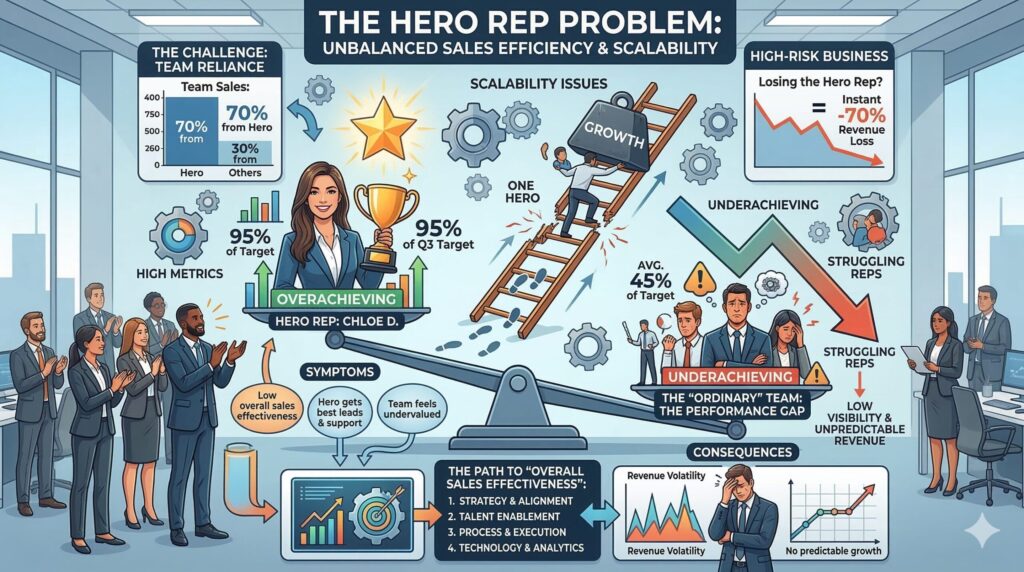
    The Hidden Risk: The Hero Rep Problem

    Many sales organizations depend heavily on a small number of high-performing salespeople. It is common for 20–30% of the sales team to generate the majority of revenue.

    While top performers are valuable, relying on them creates risk. If one of these individuals leaves the company, retires, or changes roles, revenue can decline quickly.

    Overall Sales Effectiveness focuses on creating a repeatable sales system that improves the performance of the entire team—especially the middle group of sales reps. When sales success is driven by a process rather than individual heroics, growth becomes far more scalable and stable.

    The Hero Rep Problem Image
    Is your organization relying on those few “Hero Reps” to make your number? With Overall Sales Effectiveness, you can turn “Underachieving” and “Ordinary” reps into Heros too

    Identifying Problems Before Revenue Declines

    One of the greatest benefits of Overall Sales Effectiveness is its ability to act as an early warning system.

    By monitoring key metrics such as pipeline coverage, win rates, deal progression, and sales cycle length, leadership can identify issues before they impact revenue.

    For example:

    • A decline in pipeline creation may signal future revenue shortfalls.
    • Longer sales cycles may indicate problems with value messaging or buyer alignment.
    • Deals stalled in late stages may reveal negotiation or approval barriers.

    With the right metrics in place, CEOs can address problems months before they appear in financial results.

    Aligning the Entire Organization Around Revenue

    Sales effectiveness is not just a sales department issue. It requires alignment across the entire organization.

    Marketing must generate qualified opportunities. Product teams must deliver solutions that create measurable value. Finance must ensure that pricing and margins support growth objectives. Sales leadership must ensure that opportunities move through the pipeline effectively.

    Overall Sales Effectiveness provides a common set of metrics and insights that align these groups around one goal: converting market opportunity into profitable revenue.

    Enabling Strategic Decision Making

    CEOs make decisions every day about where to invest resources. Should the company hire more salespeople? Enter new markets? Expand product offerings?

    Without clear sales effectiveness data, these decisions are based largely on assumptions.

    With the right metrics in place, leadership can determine:

    • Which markets produce the highest win rates
    • Which products generate the most profitable deals
    • Where sales cycles are slowing
    • Where pipeline generation is strongest

    This information allows CEOs to allocate resources where they will produce the greatest return.

    The Bottom Line

    B2B CEOs and owners should care about Overall Sales Effectiveness because it determines whether the company’s revenue growth is predictable, scalable, and sustainable.

    Organizations that manage sales effectiveness well typically see improvements in win rates, pipeline conversion, and sales velocity—often producing 10–30% revenue improvement without increasing sales headcount.

    But the true value goes beyond percentage increases.

    Overall Sales Effectiveness transforms sales from an unpredictable activity into a repeatable revenue engine—one that leadership can measure, manage, and scale with confidence.

    For CEOs responsible for driving growth, there are few capabilities more important. 

    Is your entire sales organization operating at a high level of Overall Sales Effectiveness? Click here to take a quick 12-question assessment and find out.

Enabling Sales helps B2B CEOs and sales leaders achieve Overall Sales Effectiveness through aligned execution, top-down KPIs, coaching, and sales leadership tools.

© Copyright 2026 Enabling Sales LLC. All Rights Reserved.

Click to show encoded email & phoneClick to show encoded email & phonePrivacy Policy