
Why CEO’s and Sales Leaders Need Top-Down Sales Performance Visibility
If you are responsible for revenue, you already know this truth:
Sales performance problems rarely start at the rep level – but they always show up there
By the time missed forecasts, stalled pipeline, or inconsistent results become visible in your CRM reports, the real causes have already been spreading across the organization for weeks or months.
Top-down sales performance visibility gives Owners, CEOs, and Sales Leaders the ability to see what’s happening early — across teams, product lines, and stages — so you can correct issues before they become unrecoverable.
Sales performance problems rarely start at the rep level – but they always show up there
By the time missed forecasts, stalled pipeline, or inconsistent results become visible in your CRM reports, the real causes have already been spreading across the organization for weeks or months.
Top-down sales performance visibility gives Owners, CEOs, and Sales Leaders the ability to see what’s happening early — across teams, product lines, and stages — so you can correct issues before they become unrecoverable.


“CRM shows you what reps are doing“
“Top-down visibility shows you the business is becoming”
The Hidden Risk: CRM Data Without Executive Visibility
Most CRM system were built to help teams track:
- Accounts and contacts
- Opportunities and deal stages
- Rep activity and notes
- Forecasts and closed results
That’s useful — but it’s also incomplete.
CRM is bottom-up. It helps you manage individual deals.
What it does not do well is provide leadership with a clear view of:
- Whether the organization is performing to plan
- Where execution is breaking down across teams
- Which parts of the funnel are weakening
- Which managers are coaching effectively (and which aren’t)
- Which product lines are slipping — and why
- Whether performance issues are isolated… or systemic
Top-Down View: From Strategy to the Rep
1. Organizational Performance
At the top, leaders need confidence that sales execution aligns with business goals:
- Revenue performance -vs- plan up and down the entire sales organization
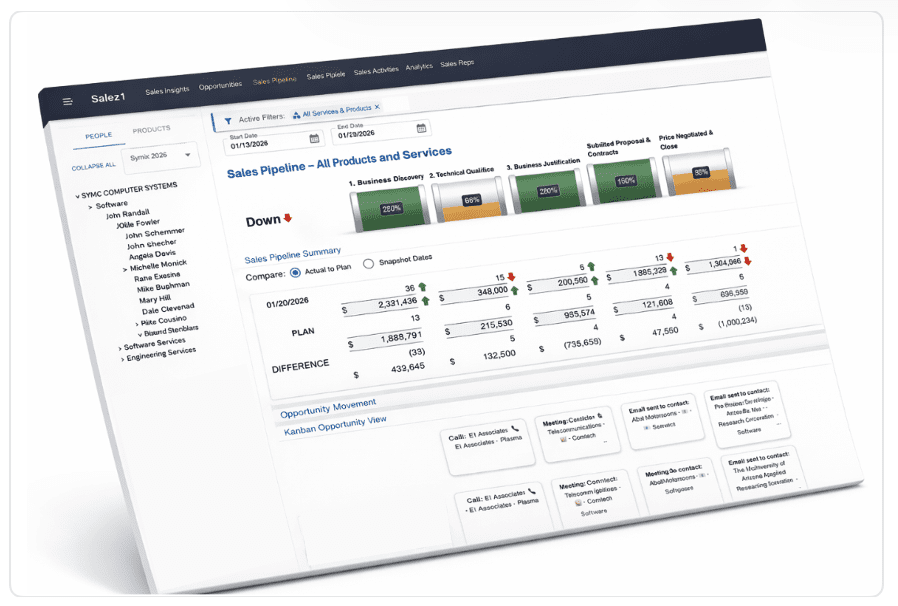
- Pipeline coverage, volumes ($ & Units) and comparison to plan
- Forecast accuracy and risk exposure
- Productive messaging on every sales call and touch
- Performance by market, segment, and product
This level answers the question: Are we on track—and why or why not?

2. Team and Manager Performance
Visibility must extend into how results are being produced:
- Performance consistency across teams
- Pipeline creation and conversion by manager
- Stage-level bottlenecks and deal aging
- Effective messaging for every level of your prospect
- Consistent sales activity cadence that achieves the desired results
- Coaching effectiveness and “drill down” inspection cadence
This level reveals whether leaders are building performance—or just reporting
3. Individual Rep Performance
At the rep level, visibility shifts from numbers to behaviors
- Activity-to-opportunity conversion
- Win rates and deal size trends
- Stage progression disciplines
- Communication skills and ability to navigate higher in the organization
- Customer/prospect facing activity disciplines
- Highly skilled and welcomes coaching and the ability to be better
This level reveals whether reps have the mindset, skills, knowledge and drive to be the best


Why Speed Matters For The Company, Sales Leadership, and the Reps
The value of visibility is not historical reporting—it’s early detection and corrective action. Effective sales leaders can:
- Focus coaching where it will have the greatest impact
- Reduce administrative time in your CRM and opportunity/pipeline reviews
- Allocate resources based on evidence, not instinct
- Hold managers and reps accountable with clarity and fairness
- Improve forecast confidence without pressure tactics
- Allows you to make targeted adjustments to repair instead of costly adjustments to replace.
- Scale performance instead of relying on heroics
If your organization is focused on achieving overall sales effectiveness, speed matters.
Overall Sales Effectiveness drives measurable business outcomes, including accelerated revenue growth, higher win rates, shorter sales cycles, lower cost of sales, reduced sales turnover, faster ramp-up of new sales representatives, and the development of a strong, positive sales culture.